Thursday, May 24, 2012

Mary Witkop Taos Pottery at Two Graces Plaza Gallery

 Mary Witkop was more than a remarkable woman of Taos to me, she was a dear friend that I selfishly miss. Day after day she was in her studio working, mixing the local micaceous clay, building pots, burnishing, polishing, coloring and polishing some more. Carefully loading up her rickety truck to take the latest finished pots to her Pilar studio where she would fire them and add horsehair or feathers to put a unique finishing touch on her creations. She did it all herself, she resisted help, even if we just offered to carry clay or a bag of dried cow pies, she had to do it herself. That’s what being a total artist was to her, she did it all from start to finish.
a mango pink coloration with black 'clouds' and a bit of corrugated design at the neck 4,000.
Green pot with corrugated crimping and horsehair 4,500.
pinks, blues, lavenders enhance this pot with a small spout priced at 4,000.
 Every now and then she’d come over for a visit, or after selling one of her pots I’d go to see her in the studio to pay her. Then I could choose the next pot that she would allow me to have for sale. She’d say ‘go ahead, and pick one out’ in return I’d ask her which was her favorite, she’d pick up a beautiful jewel-like pot, hand it to me and tell me why this was the one I should have.
these 2 pots are rather dark with a bit of color, much like an evening sky here in Taos, with the glittery micaceous clay creating a solar system of stars. 250. each
an extremely rare 'black' pot 350.
these are both Sold
 The high polish, the array of coloring and the cloud marks were her trademarks. When visiting a friend in Taos you can spot a Mary Witkop pot in someone’s home rather quickly, they are as unique as the most famous Pueblo potters.
Before her passing we had been talking about having a big exhibit of her work, she dreaded the idea and loved the idea. It would be an honor, and it would be a lot of work. Mary would begin working on 2 large pots for her annual contribution to the Taos Fall Arts exhibit up to 6 months before the opening! For many years she was awarded the Best of Show for her pottery in the Fall Arts exhibit until she asked the committee to start giving the award to someone else.
Solstice pot with Lawrence Herrera silverwork medallion
this pot was displayed in Mary's studio for many years where I always admired it, drawing me into it's magnificent beauty. Mr. Herrera attended the opening, I picked up the pot to show him that his name had been inscribed onto the bottom alongside Ms. Witkop's name.
priced at 1,000.
a bit of carving and blue linear lines on this pot enhanced with ostrich feathers 1,500.
lavender pitcher w/handle and spout 1,500.
This pot won Best of show in the 2004 Taos Fall Arts exhibit 1,500.
a lavender colored 'flying saucer' pot 1,500.
A large blue 'flying saucer' custom ordered pot 1,800.
 In memoriam to this wonderful artist and with support from her family, we are pleased to announce the exhibition “The Pottery of Mary Witkop” opening Friday, May 25 and on display through August 24, Two Graces Plaza Gallery, 68 St. Francis Church Plaza, Ranchos de Taos. There will be an opening reception on Friday evening from 5-8PM, we hope that people will come out and share their own stories and experiences about Mary. This is our tribute to Mary Witkop, we hope you will join us. For more information about this exhibit please contact Robert Cafazzo at 575-758-4101 or at r2c2graces@gmail.com
as we had predicted many of the smaller pots have sold quickly, please contact us ASAP for availability, (there may be more pots added to the exhibit, you never know...)
IF you own a pot that you would consider selling with us, please let us know, the sooner the better!
this large smokey red oxide pot is one of the 5 large pots priced at 4,000.
Small pot with blue spots Sold
all 5 of the pots at the front of this display are Sold,
the 3 to the back are available
left to right 300., 300., 350
one of the large colorful carved pots at 4,000.
 We are grateful to the Witkop & Hopper families for allowing Two Graces Plaza Gallery to exhibit and sell this beautiful body of work. 
So many people attended the opening reception last night, TGPG would like to thank all of you for making this an event we will never forget. Old friends mingled with people who had never met Mary, all awe inspired. A moment in Taos where the 3 cultures came together to once again celebrate an artist who stood among them and who we all admired.
175.
This fall the Pilar Studio Tour will be dedicated to the memory of Mary Witkop, (the organizers came by to take photographs of the exhibit)
175.
This unglazed pot was made in a group of pottery done for a Christmas exhibit sale it is priced at 200.
iron oxide pot priced at 600.
iron oxide with a hint of green Sold
I can hear the horsehair sizzle and burn onto this pot as she tossed it on. 250.
pot to the left with green & blue coloring 175. each
the green pot here 175. and above were inspired by a trip to Indonesia where much of the pottery is colored green the pot to the left white with blue is Sold
Lavender pot priced at 600.
This exhibit runs through August 24, 2012

Tuesday, May 8, 2012

Taos Lilac Festival (a 2012 preview)

All photographs Robert Cafazzo copyright 2012, 
if you would like to use any of these images please ask first, thank you.
"Lilacs against Adobe"
In May 2013 The Taos Lilac Festival will take place as an annual event you will find more information as it becomes available here: http://www.taoslilacfestival.com/ 
(They also have begun a Facebook page)

 "Lilacs with clouds"
This Spring in Taos we have seen a wonderful array of colorful flowering fruit trees, apples, apricots, and a few peaches. They even survived the early Spring snows with trees now beginning to bare little green nuggets of fruit. Over the past 2 weeks the Lilac bushes and Forsythia shrubs have been in full bloom, along with Tulips, Daffodils, & Grape Hyacinth. Now the large Bearded Iris are blooming and some early Oriental Poppies in all their glory.
Along with all the flowering wild flowers, people have been saying this is the prettiest Spring they've seen in Taos in over 12 years.
 Although there may be 1,000 types of Lilacs, in Taos we tend to see 4 of these, the classic medium colored Lilac, a paler softer Lilac, a deep intense almost purple Lilac color, and a white Lilac, which most people plant as a group with the medium colored bush.
 All over Taos you'll find Lilacs blooming at this time of year, a real treat for your eyes and nose. 
 Stop and listen you may hear buzzing bees, and chirping birds, I love the sounds of the Red Winged Blackbirds as they fly from bush to bush with their trill voices calling to one another.
 Now today being May 8, 2012, and the Lilac Festival dates being May 17-June 3, 2013 I won't make any promises for next year for these dates, I say come early, the first week of May which has been prime viewing for our spectacular flowering Lilac shrubs. 
(Please note: last year very few lilacs bloomed due to an extreme lack of moisture)
 In Ranchos de Taos & Llano Quemado there are Lilacs everywhere!
 "Soft lilac coloring at the Taos Art Museum"
 I took this shot of Lilacs in the sunshine growing over a fence nearby, the house where these are located has painted purple doors and window frames!
 "Storm over Lilacs"
 Ooooh, I wonder what Lilac Honey would bee like???
 "Bunches of Clouds and Lilacs"
 "Lilac with Horno (adobe bread oven)"
 "White Lilacs with soft color" 
Are they still Lilacs if they are white?
Bring your camera, or if you forget to, snap some pictures with your smart phone!
 A vase of Lilacs on your Dining room table or on your Bureau will add a lovely fresh fragrance of the outdoors to the room. Remember to ask first if you are picking a bouquet from a bush that is not yours.
 I took most of these photographs on a 1.2 mile walk from my home in Llano Quemado to the Ranchos Plaza, there's a lovely group of bushes here by the Church and in the backyard of our store Two Graces Plaza Gallery.
As children we would suck the sweet nectar from as many of these little flowers as we could!
Get out and enjoy the lilacs!!!

Wednesday, April 11, 2012

Fakes and Authenticity in Southwest Collectibles, Appraisals and lessons to learn.

Our store Two Graces Plaza Gallery sells Art, Books and Curios of the Southwest, we strive to sell the best items we can Vintage Antique Collectibles of the old southwest here in Taos, New Mexico at affordable price points.
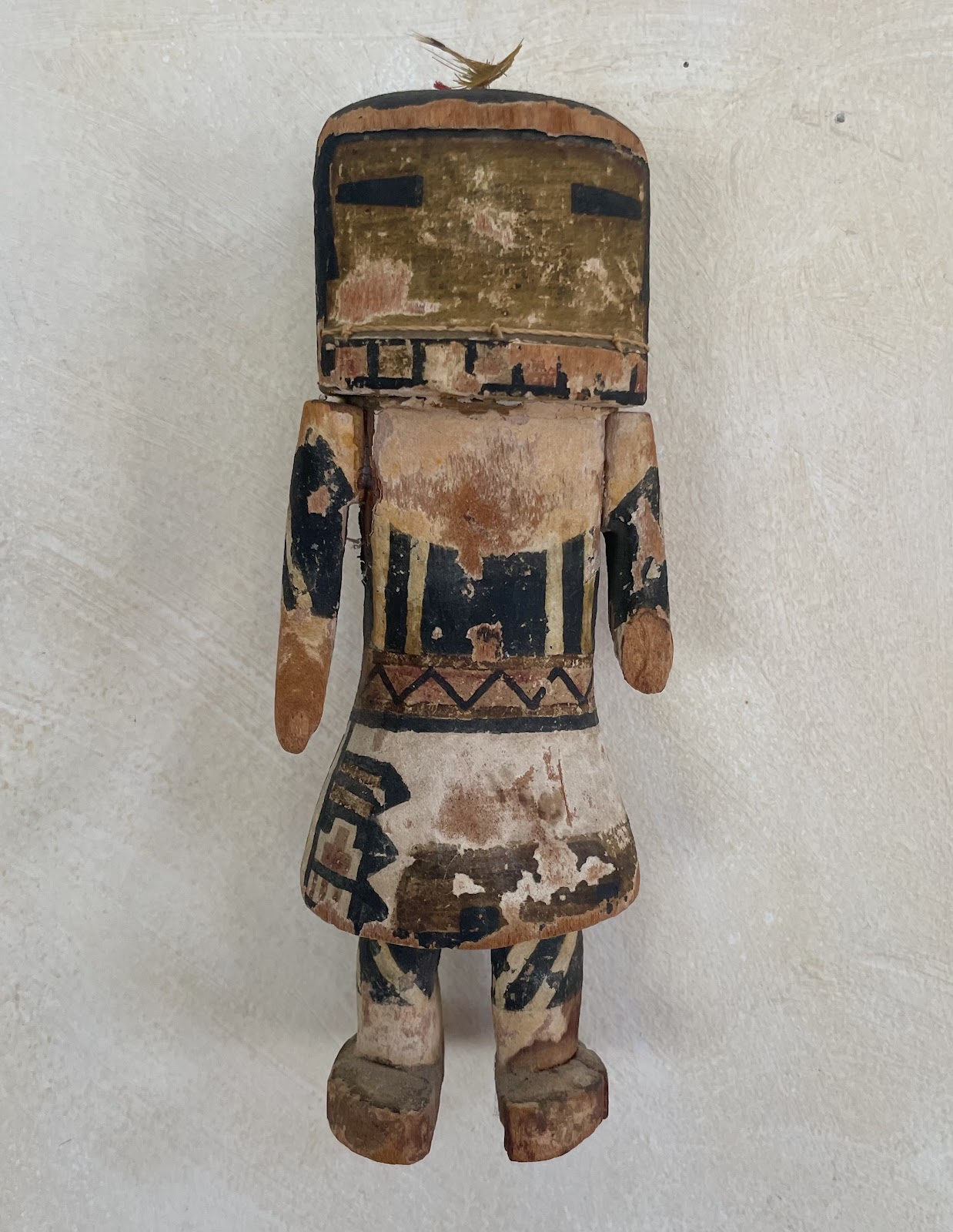
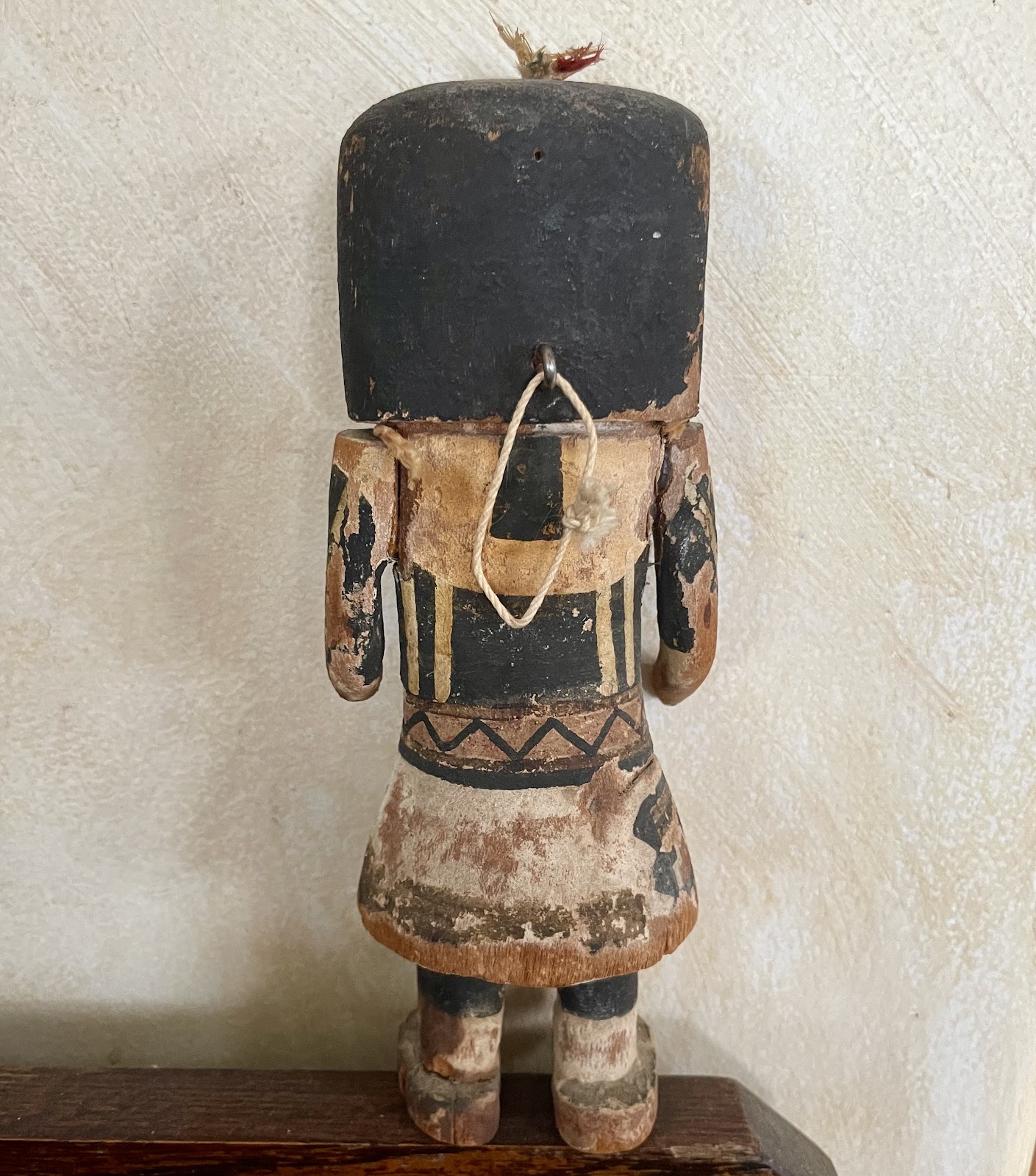
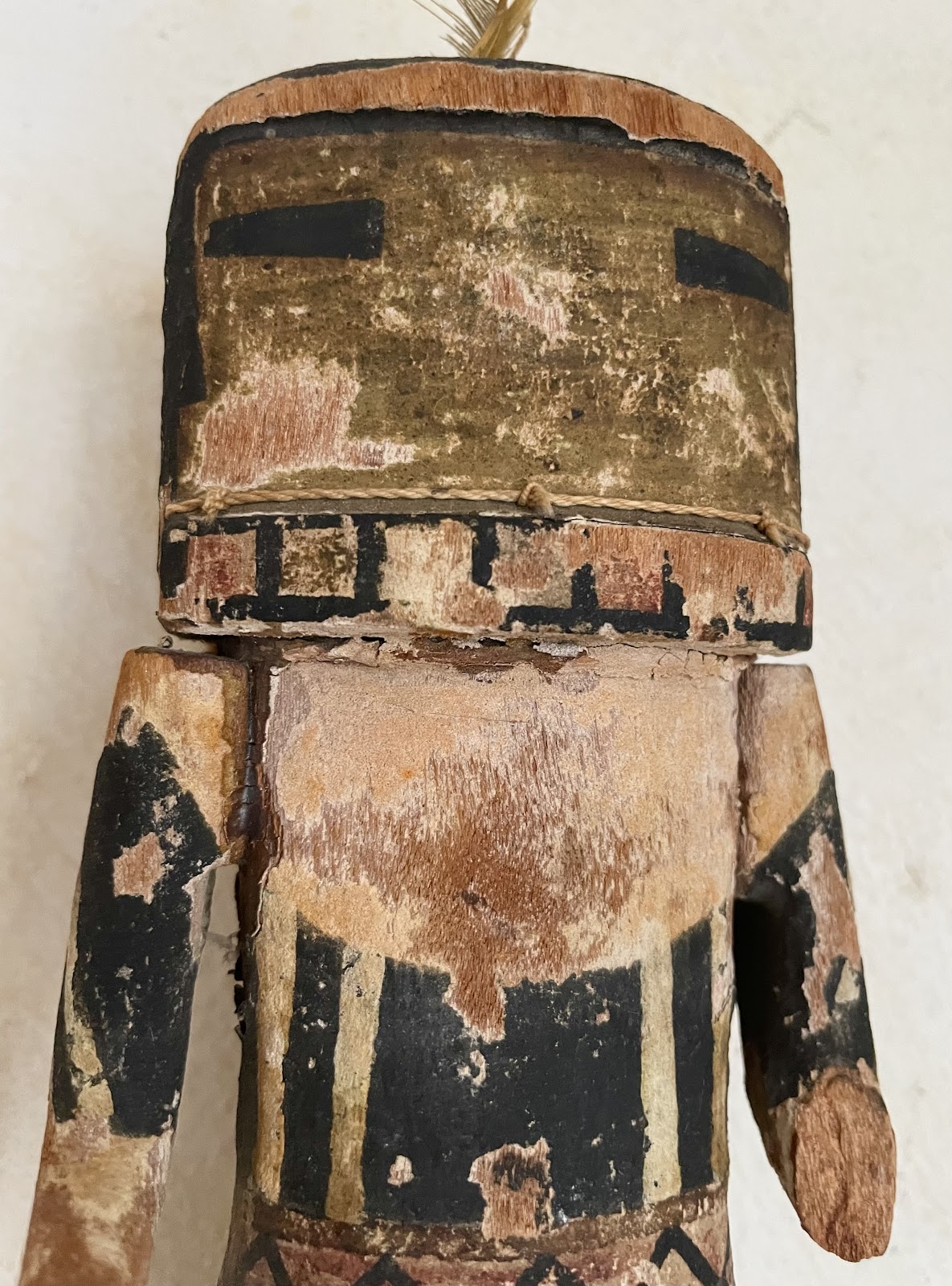
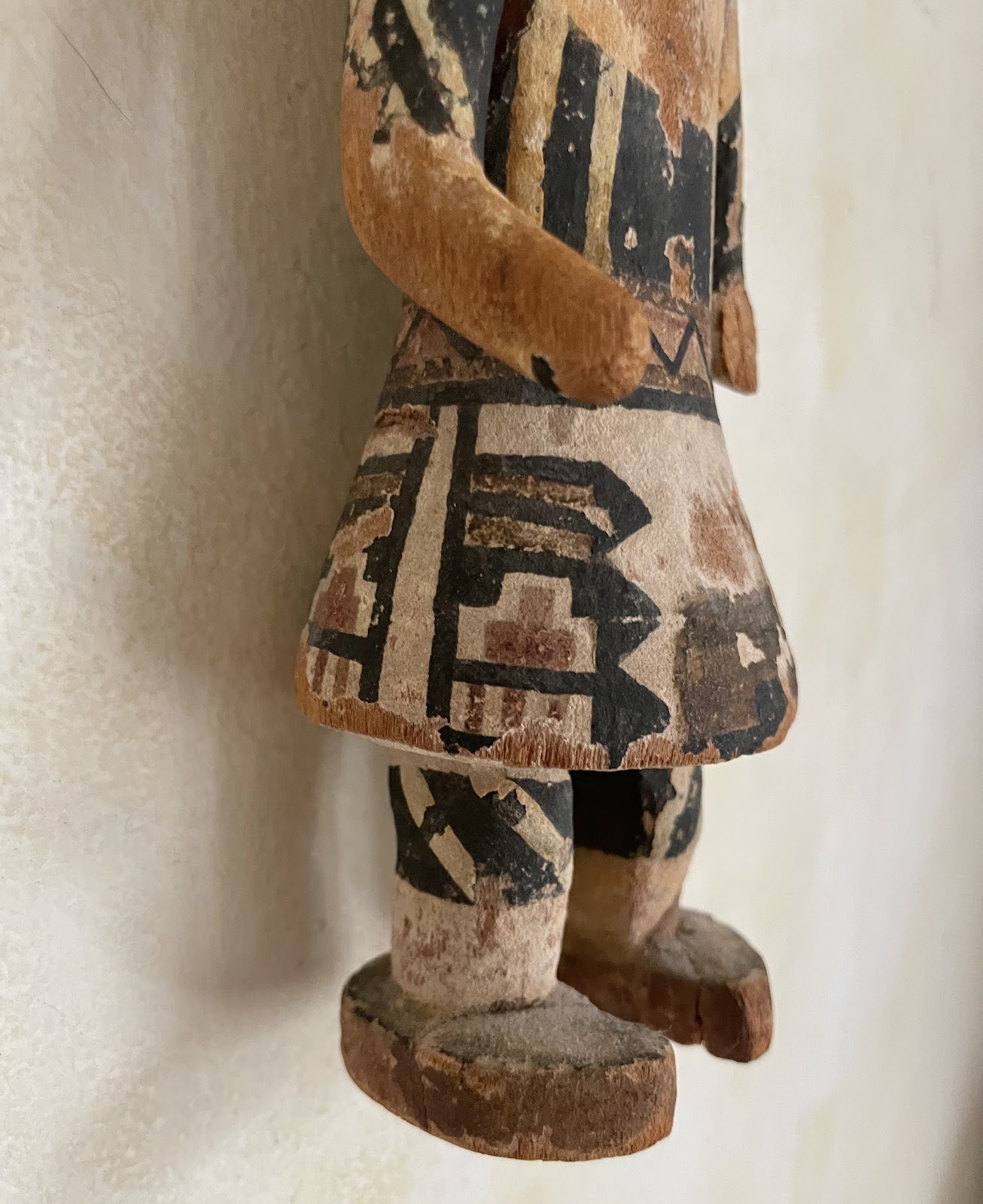
This particular post is meant to help with your shopping for antique collectibles from the Southwest and to keep you from purchasing misrepresented or fake items. To view some of the items we sell please refer to many of the other blog posts here, there are lots of pictures. Sometime soon I'll provide a post on Fred Harvey Jewelry and on Pueblo Pottery. Anxious to know what we have for sale in the Fred Harvey Jewelry or Pueblo Pottery categories please ask, I can always send you pictures or join us on Facebook where updates of new merchandise are more frequent. I have provided lots of posts on old kachina dolls and on the many curios we carry in this Blog.
It burned me up that a member of the US Armed Forces was recently duped by an unscrupulous 'Indian Trading Post' dealer in San Diego! Which motivated me to write the following post as our "tourist" season in the great American Southwest just begins.
 Recently someone asked me to repair a “kachina” they had purchased. My reply asked for them to send photos. The picture they sent was of a carving depicting a petroglyph version of Kokopelli. Let me say that Kokopelli is a doll that is carved out on the Hopi Mesas, but the typical style of this doll is that of a man or woman image with an upturned white ‘nose’, usually with a hump or sack on it’s back and a depiction of genitals. Your regular every day depiction of Kokopelli found specifically in rock art is not what you will find as an actual Kachina Doll carving.
Now let me tell you the doll was purchased in San Diego from an “Indian Trading Post” shop, this wouldn’t be my first place to purchase a Kachina Doll from, but so be it, the shop exists. This shop also has supplied a “Certificate of Authenticity” with the purchase. The name of the maker and a date is written in pen at the bottom and the name, address & telephone of the shop are printed at the top. There is also a bit towards the bottom that there will be a shipping & handling fee of $15. on items returned within 30 days, (often this is called a re-stocking fee).
ANYONE can go online and download a genuine looking Certificate of Authenticity but this has little to no value. Say you found the piece to not be genuine, and say your option is to return it and pay a $15 fee for this convenience, doesn’t matter to the shop one way or another, they’ll put it out on the shelf for sale again and sell it to some other customer.
I suggested to the person that contacted me that they ask for their money back and to contact the local San Diego Chamber of Commerce. This business has got a rather shady practice going on and action should be taken.
Even if I tell you to deal with reputable dealers, that little old man in that charming old shop is going to tell you a story that you’re going to LOVE and must buy the thing he just made up a whole lot of air about. All this, with or without a ‘certificate’ of any kind.
I can’t begin to tell you how many times people want a ‘story’ to go along with the item they are purchasing. IF I don’t know a story, I don’t attempt to make one up, and I could just as easily give you what you’re after and make something up. This to me is wrong, if I don’t know more about it than what I’ve told you, then I don’t know. If you purchase something from me that I had no idea anything about it and it turned out to be worth 100 times what you paid for it, blessings to you. This has probably happened in my shop more than I would be proud to admit. It happens to everyone dealing in antiques of any sort, you can’t be an expert in everything. Specialize in what you love and learn as much as you possibly can about that field.
A local dealer came in and asked about a large display of old oil painting brushes that I had, he wanted to know if they had belonged to a significant Taos Artist, which they had not. I told him so and although they made a very beautiful picturesque display he walked away without purchasing them. Another local dealer thought about purchasing something from me for a year, one day he came in and bought the item when I wasn’t at the shop for 1/3 the price I had on it. I’ve seen it on his website repainted to look more ‘authentic’, although I can be as mad as I am, there is nothing I can do about this. So, if it looks too good to be true, be careful, and this person has a very high end shop with a large clientele. Just reporting this here can get me into more hot water than I care to think about, for the are well respected and connected dealers.
One of the local ‘pickers’ came by to show me a few kachina dolls, one of which was from a Santa Fe collection that he was suspicious of because of the way the ears were, he told me so and as I looked at it I remembered that the doll could be carved with one ear or both ears in that manner. Sure enough it’s in the best of the books on kachinas "Following the Sun and Moon: Hopi Kachina Traditions" by A.H. Secakuku 1995 as such, either way one cone shaped ear or 2. I wish I’d purchased it from him it was a beauty ca 1950’s.
Often a knowledgeable person will walk into the shop and tell me more about something I have that I didn’t know anything at all about. At times I hold onto items I don’t know about rather than make a mistake. I purchased a doll that appeared to be some sort of Mohawk Indian doll, I asked a few people about it and they came to the same conclusion, “African”.
My own experience with purchasing a Kachina, 35 years ago, was with an “Indian Trading Post” shop in Rockport, Massachusetts where I purchased a ‘genuine’ Indian Kachina. You can take a wild guess that, yup, I bought my first Navajo Pow Wow Dancer that day. A few years later I bought a “Kachina” doll on Ebay, that too far from the real thing, the carved wooden kachina turned out to be a plastic resin casting! One of the traders I know bought a wonderful fake from someone on Ebay, which I purchased from him just to have in my shop to show people how desirable a fake can be, (and let me tell you, more people wanted to buy that carving than any other I had in the shop, I finally sold it on Ebay as a fake just to get rid of it).
As I look on Ebay today of 350 listings under the search Kachina in a one day time span 38 show up that are actually Hopi carved dolls, very elaborate contemporary items, 62 are Navajo Pow Wow Dancers and 3 are completely fake, one of which I would consider calling a “Boy Scout” carving but that would be overly generous. The rest of the items that turn up in my Ebay search are prints, jewelry and stuff that for no rhyme or reason should show up for this search. I will give Ebay credit that they do have a nicely written post on how to spot a fake kachina, but as far as their “Buyer Protection” policy goes, I warn you it’s more of a BUYER BEWARE protection policy than a truly in your best interest policy. I’ve read that 98% of autographs purchased on Ebay are fakes, that’s a high percentage and a field that you should probably stay away from.
Recently a customer pointed out to me a big auction house that had just sold lots and lots of Kachina dolls. As I looked at the images there were many fakes among the lots, many misidentified and lots of stuff the auction house hedged their bets on by listing them as ‘Hopi Style’. The customer asked me why these didn’t sell for high prices. I knew a few of them had been sold on Ebay, the person that had collected these had been buying up quite a bit of stuff online. As the dolls were sold in group lots, the fakes devalued the real and made bidders skeptical of all. If I had purchased a group lot in this sale I would have returned the fakes to the auction house and kept the legitimate ones, and still had been purchasing a couple of quite lovely old dolls.
On Jewlery, there is a town in the Philippines named Zuni, where they make “Zuni” jewelry or FAKE Native American Zuni Jewelry. The stuff they export is Extremely popular in shops across the US. Much of the beaded necklaces and earrings for sale in shops across the Southwest may indeed be Made by a Native American, but more than likely the beads and fetishes were made in China or the Philippines and “Strung together” by that Native American. Whether you are purchasing from a sweet looking little girl or a beautiful Grandmother on an Indian Reservation or in Indian Land, people lie bold faced to you when you ask if they “Made” it. If the item doesn’t LOOK hand crafted don’t assume it is. If it’s a gift for your 5 year old and is inexpensive enough no worries, until they grow up and find that you got them a lovely FAKE. You wouldn’t want your legacy to be, look, Grandma handed down a fake to me!
Nowadays legitimate makers of fine Silver jewelry can hardly afford the silver, so they are using copper more and more, same fine craftsmanship and more affordable, although turquoise on copper may not look quite as lovely as it does on silver. Years ago a few very accomplished makers of Concha belts turned to using Nickel silver, not sterling they couldn’t afford it, the craftsmanship is some of the best out there, but the material is not the best. Silver tarnishes, don’t clean it, let it age with a nice patina over the years. Silver when rubbed hard and vigorously with your finger will leave a black mark on your finger, nickel silver will not leave any residue behind at all. A woman I know here came into the shop all happy at her fine Concha Belt and how valuable she assumed it to be. I was the only one bold enough to tell her the truth, nickel silver and not nearly as valuable as a sterling silver belt would be. She was so mad at me she didn’t speak to me for a year and actually bad mouthed me to friends. Taos is a small community and word gets back to you here. Should I have lied to her, ethics say no, I told her the truth no matter how much it hurt her feelings and no matter how badly she lashed out at me. At the time she was desperate for money and that was all she could think about, now she has sold her house for an inflated Taos price and is once again happy with the world and even with me.
The people that set up in front of the Palace of the Governors in Santa Fe are vetted and must be selling legitimate crafts otherwise they are not allowed to sell there. They are one of the best sources for real contemporary Native American Jewelry.
On Pottery I will tell you if you are considering making a purchase listen to the way the pot sounds when you tap or ping it with the back of your finger. There should be a ring, like when you tap a crystal wine glass, or at least a nice sound, not a dull thud. Some places wrap pottery in plastic wrap to ‘protect’ them from dirt, don’t buy it unless the dealer is willing to unwrap it and tap it for you. The best book to read up on what to look for when it comes to Pueblo Pottery is “Southwestern Pottery Anasazi to Zuni” by Hayes & Blom 1996. There are specific reasons one pot can be more valuable than another, age, maker, pueblo, style, sound and on and on. Learn about it and collect what appeals to you. If you are looking for a quick fix of ‘southwest’ style and choose to purchase pottery from Mexico of the Mata Ortiz type you are on your own as far as I’m concerned. A couple from Colorado came by last weekend asking if I would appraise their Mata Ortiz collection for insurance purposes, even a local dealer that specializes in the stuff wouldn’t appraise it for them, it has Little value! This type of pottery has appreciated in value very, VERY little, with very few auction houses even willing to resell it. It may look quite nice on your bookshelf, so let’s keep it at that, as far as investment goes, you will never get your money back on it, (unless all southwestern pueblo pottery disintegrates overnight).
I purchased a very large Acoma pot years ago from a friend’s storage unit, her dad had passed away and he was a Santa Fe Flea Market dealer. When I first came to the Southwest I would see dealers tossing dirt onto the items they had on display at the Santa Fe Flea Market, aging them! The pot had a chip on the rim, but it was so oversized that I had to have it. I took it to 2 different dealers I knew here, they both smiled when they saw it. They both told me that years ago there was a guy in Mora, New Mexico making these pots that looked like the real thing, but they were being FAKED and sold to every dealer in Santa Fe as the genuine rare pots that they appeared to be. It was the chip that was the dead give away, they could tell from the clay and how it had been fired this was not a legitimate pot. This was my first lesson in fake pottery, one of the dealers told me that the lesson I had just learned was worth every penny I paid for the pot. I did sell the pot for exactly what I’d purchased it for to a local couple (as a fake, complete with story) to put on display on the roof top of their Bed and Breakfast where it would make a great display.
When the economy collapsed a few years ago the New York Times published an article about some of the best places to invest your money with vintage collectible Native Americana being one of the best investments and with pueblo pottery at the top of the list. Why because it can break and therefore pieces that are not broken have become rare and more desirable, they just appreciate in value, plain and simple. Right now we have a few pieces of pottery that are very good investments, my prices are at least half of what other dealers would be selling them at.
Furniture has been faked for years and is one of the worst culprits in the marketplace as you will see very well documented on shows like Antiques Roadshow. Lots and lots of fine country furniture have been faked for over 200 years, and if you don’t know your stuff then be cautious not to overspend. A local shop has a lovely hand made chest, which looks very much like chests you would see in Museum collections of southwestern furniture. Then I looked at it more closely. The wood has a copper or brass patina on it, why in the world would WOOD have a green patina on it unless it was in contact with copper or brass! Then too, no dove tail joinery the thing had been cobbled together with old boards, but not old nails just some regular rusty nails that could have been re-used from some other wooden item. Worm holes and age can be faked, people beat things with heavy chains and use sandpaper to ad age, even use old boards from older furniture to be remade into something else entirely. Take a close look is that consistent wear and tear or is that added on for your deception?
Sometimes you purchase something for the look and style of the piece, if the price is right and you’ve got to have it then go ahead and make the purchase. If you are buying something to hand down and that will appreciate in value please be careful what you buy.
Lastly a word on appraisals, for insurance purposes go to someone who specializes in what you need appraised, ask for a written statement that is notarized and PAY FOR THE APPRAISAL. As for appraisals to stroke your ego and prove how smart you are that you got a great deal, DON’T even come a knocking. There’s nothing worse than someone who wants me to work for them for FREE. And yes, I consider it work, my knowledge, HONESTY and my time is a valuable commodity. Be prepared to be told the truth about your item, again have you ever watched Antiques Roadshow, there are winners and losers out there. When that little old guy pulled up with a bolo tie he bought 50 years ago here in Taos, I didn’t have the heart to tell him that it probably wasn’t worth what he had paid for it. Recently a book was published specifically about Bolo ties, usually values go up because demand goes up when a book is published on a particular collectible, in this case even the book has devalued and today can already be found in remainder bins. There’s just little to no interest in these beautiful pieces made for gentlemen of the southwest. A woman turned up with a brass pitcher, from India, not Native American, she thought she had a valuable piece in her possession. If you are given an appraisal value by someone who specializes in that particular item, the dealer should be willing to make you an offer, usually 1/3 to ½ of that value. Have you ever watched Pawn Stars on the history Channel or American Pickers, we are in it to resell it, not buy it for full blown retail. Pay for the appraisal, at least 5% to 10% of the appraised value. What you really want is a Low figure and a High figure, a range or Ballpark figure. Some dealers will inflate values just to get a higher payment for the appraisal, offer the item to them, if they are unwilling to pay at least 1/3 of the stated appraisal then you shouldn’t be dealing with them at all because they are not a legitimate expert in this field. Some people go from one dealer to another looking for what they want to be told in the first place and dismissing the one person that was actually honest with them! How do you know an honest appraisal from one that just doesn’t want to hurt your feelings, you should say so and offer to pay for their knowledge. If you choose to sell it online (Ebay) be prepared to take that 1/3 with all the fees involved you will be getting more like ¼ the value. A legit dealer would more than want a great piece to resell in their shop! When I can’t afford something that I would want to have in my shop I will offer to put it on consignment, then we both, seller and consignor can have a worthwhile experience. I am always looking for GREAT vintage Kachinas, Pottery, Jewelry and Tramp Art to resell in my shop.
As I’ve said here even I’ve been taken, and have slowly but surely learned many lessons the hard way. I remain optimistic and trusting, and am willing and able to share my hard earned knowledge with my customers. If you made a purchase on the side of the road, at a Flea Market, or at a Yard Sale and it seemed too good to be true, it probably is. The problem is if you spent too much on it, then you’ll have no recourse to return it. Over the years we have been in business 9 years here in Taos, and I am proud to say we have had fewer than 5 returns, I think the actual number may be 2, and not for reasons of legitimacy. A legitimate store or auction house will stand by what they are selling.
This post is meant to be of some help and not to frighten you away from purchasing collectibles of any sort.
Both photographs on this post are by the photographer Brian Snyder to see more of his work please view his images at http://www.briansnyder.com/#a=0&at=0&mi=1&pt=0&pi=1&s=0&p=-1
These are two of my favorite photographs!
Addendum: The reason I posted this piece in the first place was because of my own frustration for the person (a member of the military) who was 'taken' by a 'trading post' in San Diego. She went on to contact the State Attorney General's office and has now been given a refund to her credit card.